
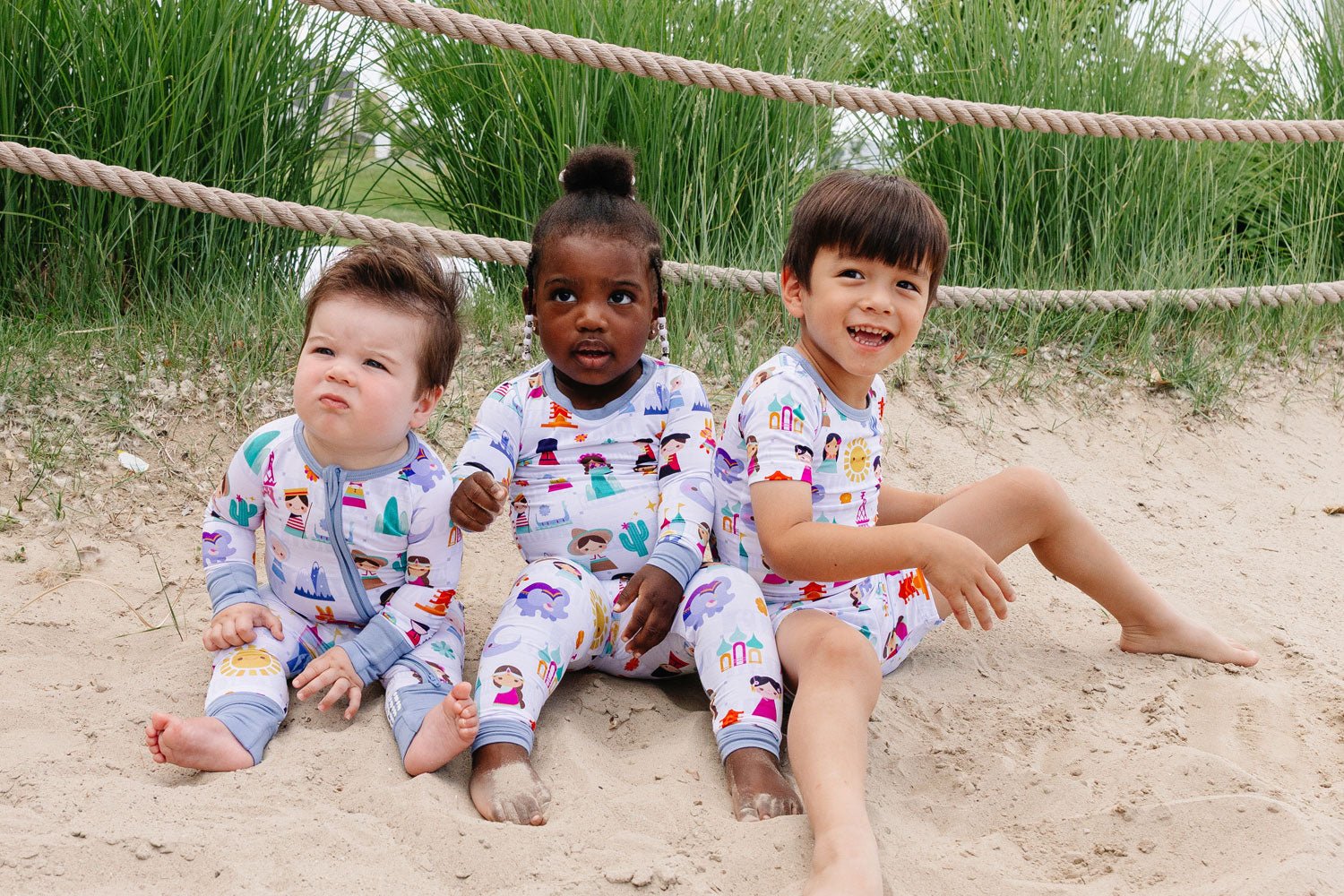
Let's be real. Most parents do not buy bamboo pajamas because of a textbook. We buy them because our kids run hot, wakes up sweaty, gets red marks from seams, or has skin that flares if you look at it wrong.
So here's the positive, science-backed case for bamboo pajamas, without pretending they are a cure-all: Bamboo pajamas are a better-for-your-baby choice because they are built around comfort triggers that actually matter for little bodies, namely friction, sweat, and overheating. And those are exactly the variables textile and dermatology research keeps circling back to when it talks about skin irritation and wear comfort.
Why Bamboo Pajamas are a Better-For-Your-Baby Option

Friction is a real problem for sensitive skin
Dermatology and textile discussions around atopic dermatitis repeatedly highlight practical triggers like irritation from rough fibers, friction, and discomfort from clothing. The short version is: when skin is reactive, what touches it matters.
That's why "buttery soft" isn't just cute copy. It maps to a real mechanism: less friction, less rubbing, less itch-triggering contact for many kids.
Breathability and moisture drives cooler sleep
When parents say "temperature regulating," what they usually mean is: "my child is not waking up damp and cranky."
Textile comfort research ties thermal comfort to measurable properties like air permeability, drying time, and water-vapor transmission. In other words, fabrics that manage moisture well tend to feel more comfortable next to skin.
And yes, bamboo-containing fabrics show in the research conversation around moisture vapor permeability and thermal wear comfort depending on construction and yarn structure.
The regenerated-cellulose family has strong comfort signals
Bamboo viscose is a regenerated cellulose fiber. A clinical study on fabric preferences in people with atopic dermatitis found participants significantly preferred lyocell over cotton for softness, temperature control, and moisture control.
Lyocell isn't bamboo, but it sits in the same broader "smooth regenerated cellulose" category that often performs well for comfort. That gives bamboo viscose a strong, science-consistent argument as a comfort-forward choice.
What Bamboo Fabric Actually Is
Most bamboo pajamas are made from bamboo viscose, which is bamboo process into a smooth regenerated fiber.
Here's why that matters in a good way:
- It is one of the reasons bamboo pajamas feel smooth and drapey, rather than crisp or rough.
- Smoothness is part of why families often choose bamboo for kids who are picky about tags, seams, or scratchy textures.
You will see “antibacterial bamboo” claims online. The literature gets more nuanced, linking bamboo’s antibacterial compound to lignin in the plant, which is not the same thing as proving strong antibacterial effects in the finished regenerated fabric.

Eczema-Prone & Sensitive Skin: Bamboo is the Smarter Clothing Choice
If you child has eczema-prone skin, you already know there is no magic pajamas that replaces proper skincare. But the goal of pajamas isn't to treat the condition. The goal is to avoid making it worse.
An evidence-based review on fabric selection in atopic dermatitis focuses on practical recommendations for clothing and bedding choices across various textiles and finishes.
Then you have the real-life clue from clinical care: viscose-based tubular garments are used as part of wet wrap therapy systems, because the material is workable for skin-contact dressing routines.
Does that mean "bamboo pajamas treat eczema?" No. But it does support the bigger point: soft, flexible, cellulose-based fabrics are commonly considered compatible with sensitive, irritated skin environments.
Why this supports bamboo pajamas as "better-for-your-baby"
- Smoothness helps reduce friction triggers.
- Comfort and moisture handling are strongly linked to thermal comfort in textiles.
- Regenerated cellulose fabrics have demonstrated strong wear comfort preferences in sensitive skin populations.
Heat Rash and Hot Sleepers: Bamboo Supports the Biggest Rule that Matters
Heat rash is basically trapped sweat meeting heat and friction. The most consistent medical guidance emphasizes reduces heat and wearing loose-fitting, breathable clothing.
That is bamboo's sweet spot. A well-made bamboo viscose pajama is typically:
- lightweight
- breathable
- comfortable when a child runs warm
And comfort research backs the broader mechanism: moisture transport and ventilation properties drive the microclimate between skin and fabric.
Where NextHug™ Bamboo Fits: Designed for Real Comfort Triggers

At Bam & Stitch, we called our fabric NextHug™ Bamboo because we built it around the exact "why bamboo" reasons above: softness, breathability, and stretch that moves with real kids.
NextHug™ Bamboo is a 95% bamboo viscose and 5% spandex blend in key pajama styles.
And the construction details matter just as much as the fiber:
- tag-free comfort
- no snaps or buttons
- designed for smooth, irritation-free wear
This isn't marketing fluff; it's real, science-backed fact. Our NextHug™ Bamboo coupled with thoughtful build choices quite literally sets us apart from the rest.
If your baby already has diaper rash, the goal is simple: protect the skin and keep it dry.
Shop the Science: NextHug™ Bamboo Favorites
FAQ: Science-Backed Bamboo Facts
Are bamboo pajamas good for babies with sensitive skin?
They can be a strong option because sensitive skin often benefits from smoother, less irritating fabric contact, and textile guidance for contact dermatitis focuses heavily on comfort and trigger reduction through clothing choices.
Are bamboo pajamas better than cotton?
For many families, bamboo viscose pajamas feel smoother and more breathable. Research on thermal comfort shows that moisture transport and ventilation properties matter a lot, and regenerated cellulose fabrics scores well in wear comfort, especially in sensitive skin contexts.
Do bamboo pajamas help with heat rash?
Heat rash prevention venters on avoiding overheating and choosing breathable, loose-fitting clothing. Bamboo pajamas fit naturally into that strategy because they tend to be lightweight and comfortable in warm sleep conditions.
The Bamboo Choice That Just Makes Sense
At the end of the day, we are not shopping for pajamas to solve every skin struggle or guarantee perfect sleep. We are shopping for the option that feels better, wears better, and supports the biggest comfort factors that actually show up in real family life: softness against sensitive skin, breathability for warm sleepers, and a fabric that moves with your child instead of rubbing, bunching, or trapping heat.
That is why we are confidently team bamboo, and why we created NextHug™ Bamboo. It's our way of taking what parents love about bamboo, then dialing it in even further with a bouncy, breathable blend built for everyday wear, bedtime routines, and the kind of cozy moments you want more of.

Made by Moms, For Moms.
At Bam & Stitch we're dedicated to creating clothing as soft, playful, and resilient as the little ones who wear them.

Share:
Stop the Blanket Tug of War: Bamboo Cooling Blankets for Kids and Adults
April: Supporting the Autism Society of America